
In recent years, the emergence of shared massage chairs has brought the massage chair category closer to ordinary consumers. Previously, massage chairs were experience-oriented products, requiring consumers to visit physical stores to truly understand them. Today, shared massage chairs — with their flexible pay-per-use model and no need to occupy home space — have gained increasing attention from users.
The domestic massage chair market is also growing rapidly. Compared with household penetration rates of about 10% in Japan, 10% in Hong Kong, 8% in Taiwan, and 5% in South Korea, the domestic market's penetration rate of less than 1% indicates huge room for growth.
Amid favorable policies for the broader health industry, what changes are taking place in product technology and industry development? TMTpost conducted in-depth discussions with Rongtai Health, a leading massage chair company.
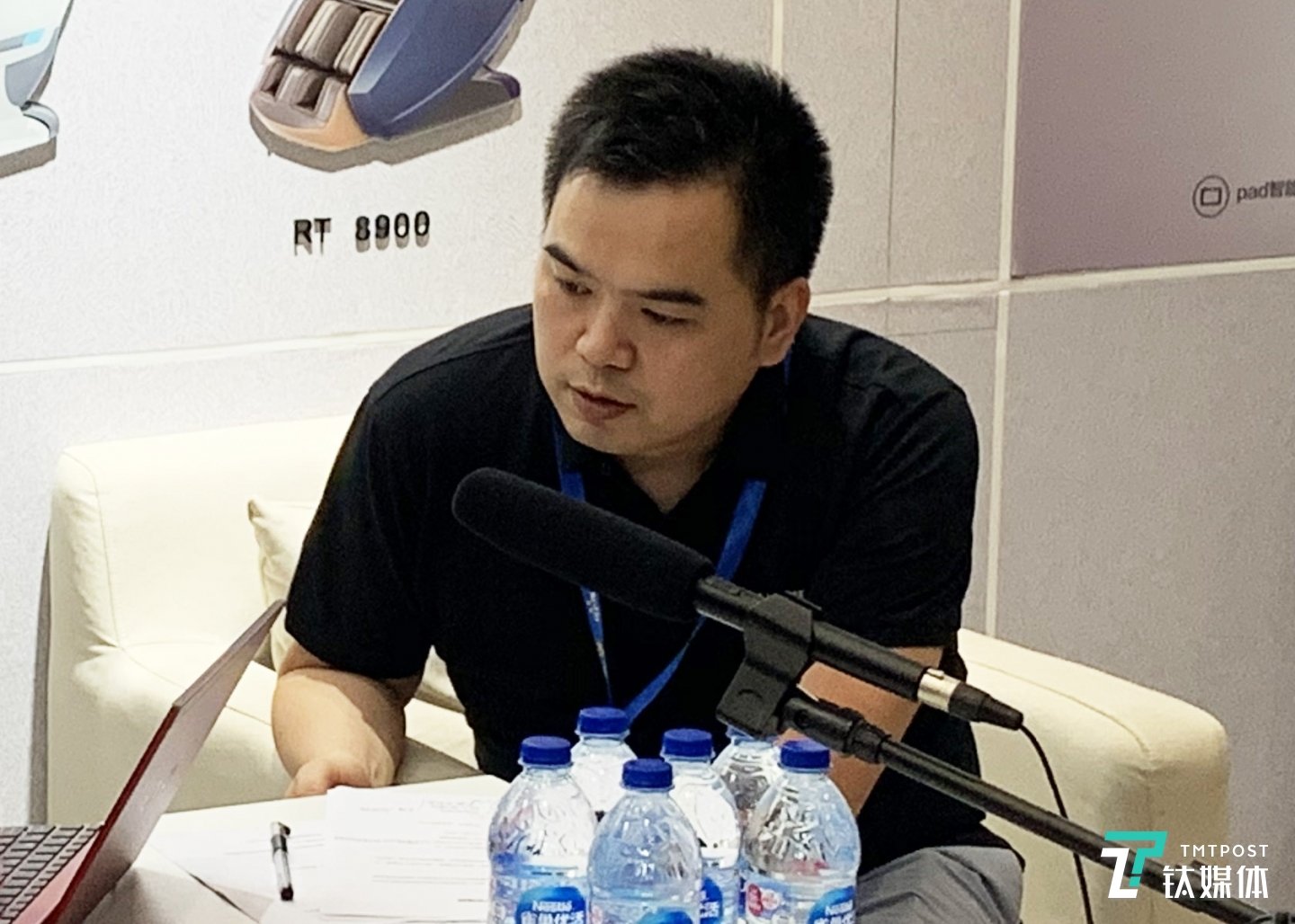
TMTpost interviewed Wu Xiaogang, General Manager of Rongtai's Brand Operations Division, and visited Rongtai’s factory in Shanghai. What left the deepest impression on us was the word "focus." On one hand, continuous market research, consumer insight, and product strategy have allowed Rongtai to grasp every shift in the industry. On the other hand, sustained investment in production and technology has built a strong technical moat.
23 years of independent technology R&D, internet-driven rapid growth
Many people may not realize how complex massage chair technology is. But similar to the evolution of smartphones and home appliances, massage chair technology has undergone several iterations. Today, features like voice control, flexible rails, and heating have all been successfully integrated.
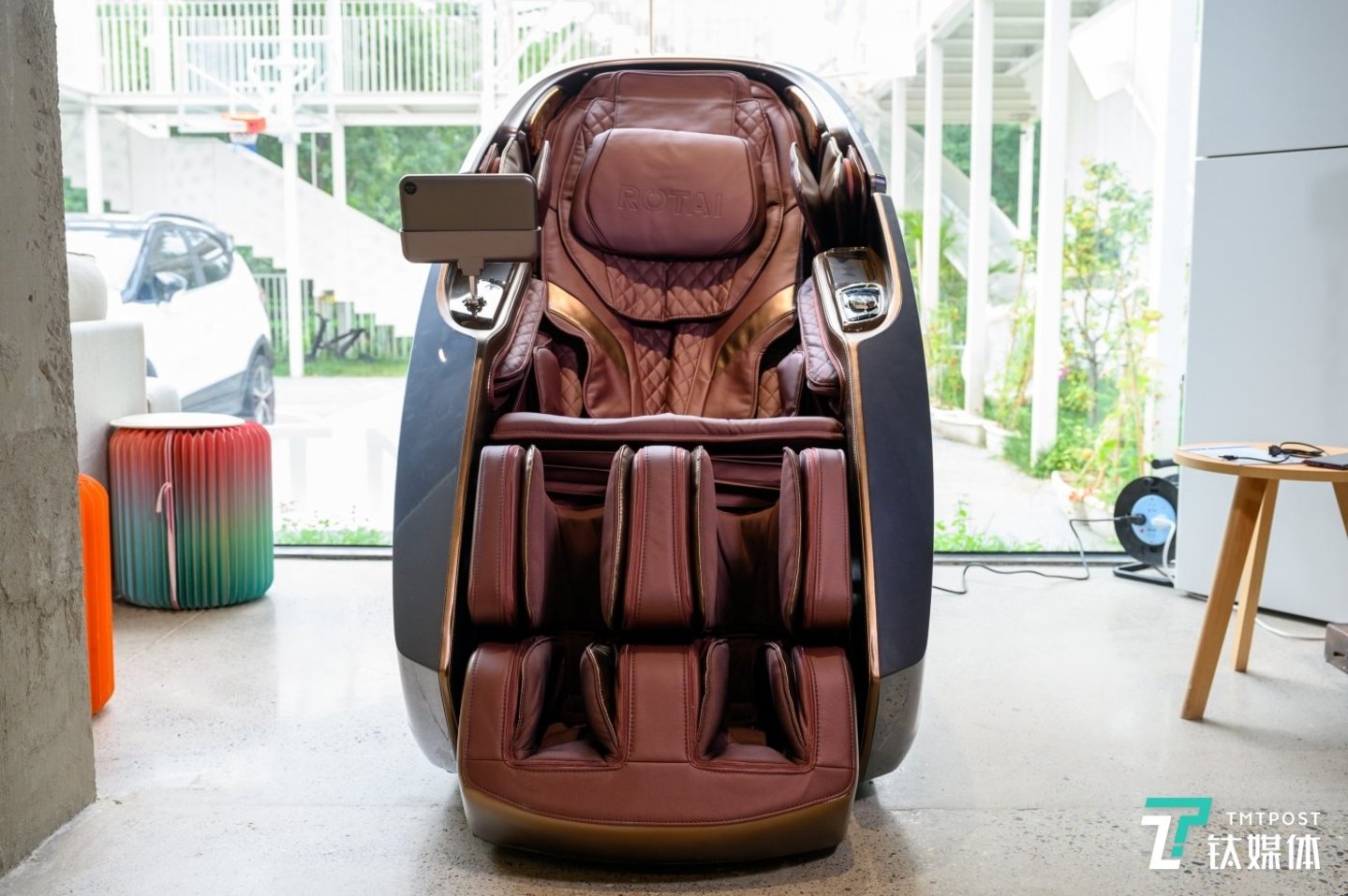
Wu Xiaogang told TMTpost that the ultimate goal is to turn the massage chair into a dedicated "personal masseur" for households — capable of replicating professional massage techniques and even surpassing human masseurs in comfort and precision. For instance, the flagship "Gemini" massage chair features a flexible guide rail and dual-mechanism design, achieving a true "Thai-style stretching" experience.
In terms of the industry environment, the massage chair market is entering a new growth phase, attracting many home appliance and internet companies. Rongtai maintains an open attitude toward competition, believing that more players will boost overall awareness. China's sub-1% penetration rate means vast untapped potential.
Wu Xiaogang added that Rongtai's brand positioning differs from these "cross-industry players": Rongtai focuses on the premium market, while new entrants tend to target the mid-to-low end.
This situation is closely related to the high barriers in the massage chair industry.
Premium brands usually possess complete upstream and downstream supply capabilities and independent R&D ability — capacities that many appliance or internet companies lack. Without differentiation, it's hard to succeed in the high-end market.
Wu Xiaogang noted: "Since Rongtai's founding 23 years ago, we have been in an expansion mode: investing more in R&D, expanding production capacity, and building new factories."
Currently, Rongtai produces 30,000 units per month, with an annual capacity of 350,000 units. A third-phase plant expansion is underway. Rongtai also provides OEM services for overseas brands, allowing it to understand global user needs and market trends.
Brand strategy rejuvenation: a traditional company embracing the zeitgeist
From its emphasis on quality and R&D, Rongtai looks like a more traditional manufacturing company — an "asset-heavy" operator. Yet TMTpost noticed that despite its premium positioning, Rongtai has launched IP-linked products like the "Black Panther" and "Big White" massage chairs targeting younger consumers. Wu Xiaogang believes that staying close to consumer trends is essential for an industry leader.
Today, the main consumer demographic has shifted from the elderly to white-collar workers born in the 1980s and 1990s. Many low-to-mid-tier brands still center their marketing on "jade health benefits" or "filial piety to parents." Rongtai aims to break away from that traditional mindset. For high-income consumers entering their 40s, having a private relaxation space is crucial, and the Gemini massage chair is specifically designed for that scenario.
"When many appliance makers enter this field, they bring the inertia of home appliance design. However, a massage chair creates a unique, exclusive relaxation space — distinct from the 'tool-like' nature of traditional home appliances," Wu Xiaogang said.
The growing interest in massage chairs among younger people also stems from rising health concerns. According to a 2016 WHO report, over 6 billion people worldwide are in a sub-health state — 85% of the global population. In China, sub-health accounts for about 70% of the population (roughly 950 million people), and the number continues to rise.
For office workers who remain seated for long hours, muscle relaxation is vital. However, professional massage services require appointments and are often limited by location. Massage chairs thus become excellent alternatives. To meet the aesthetic needs of younger consumers, Rongtai has partnered with IPs like Disney and Marvel; the Black Panther edition is one such example.
In its overall product strategy, Rongtai also launched the "Momoda" sub-brand targeting younger consumers and the mid-to-low end, covering massage chairs, massagers, and other products — lowering the entry barrier for consumers.
Technical strength competition: the high-end market belongs to professional brands
Wu Xiaogang told TMTpost: "The high-end massage chair market is where the real battle of strength occurs. Once price is set aside for premium consumers, experience and service become the key yardsticks." In this arena, "having what others don't" is a vital survival rule. For example, the Gemini chair’s flexible guide rail features a completely different structure from traditional straight, S, L, or SL rails.
The new flexible rail breaks the rigid angle limitations of conventional chairs. Traditional rails suffer from reduced effective massage stroke and force when the reclining angle deviates. The flexible rail maintains full massage coverage at opening angles from 112.5° to 165.5°, enabling the industry's only authentic "Thai stretching" function.
This exclusive experience often drives high-end consumers’ choice. With dual-mechanism tech and AI voice control, the Gemini is the mass-produced model closest to human-hand massage.
Beyond hardware breakthroughs, Rongtai is actively upgrading its software algorithms. "We have an industry-university research project with Tongji University, creating a mechanical analysis model for the massage mechanism to refine product design and force adjustment," Wu Xiaogang said.
Rongtai also collaborates with Shanghai University of Traditional Chinese Medicine to implement traditional Tui-na massage techniques via machines. This combination of software and hardware has led to the milestone Gemini massage chair — a testament to Rongtai's "professionalism."
Conclusion
According to Rongtai's 2019 financial report, annual revenue reached 2.31 billion yuan, with Q4 revenue of 680 million yuan — a 27.3% year-on-year increase. Steady revenue growth validates the impact of Rongtai's consistent technology investment.
In the long run, the massage chair market remains a fast-growing blue ocean, where the high-end segment drives technical progress and the mid-to-low end expands accessibility. Rongtai has a clear brand focus: technological R&D and professional product quality — capturing a significant share of the high-end market through technology and reputation.
The future trend of massage chairs lies in AI, internet integration, and youth orientation. Only by focusing on product R&D and continuous iteration can companies satisfy user experience. Rongtai has already started sprinting down this path. (First published on TMTpost APP, author: Deng Jianyun, editor: Xiang Ou)


