By Bullet Finance | Author: Huang Yanhua | Editor: Feng Yu
When young people start putting goji berries in their thermoses and basking in the summer sun, their physical and health anxieties have already reached a peak.
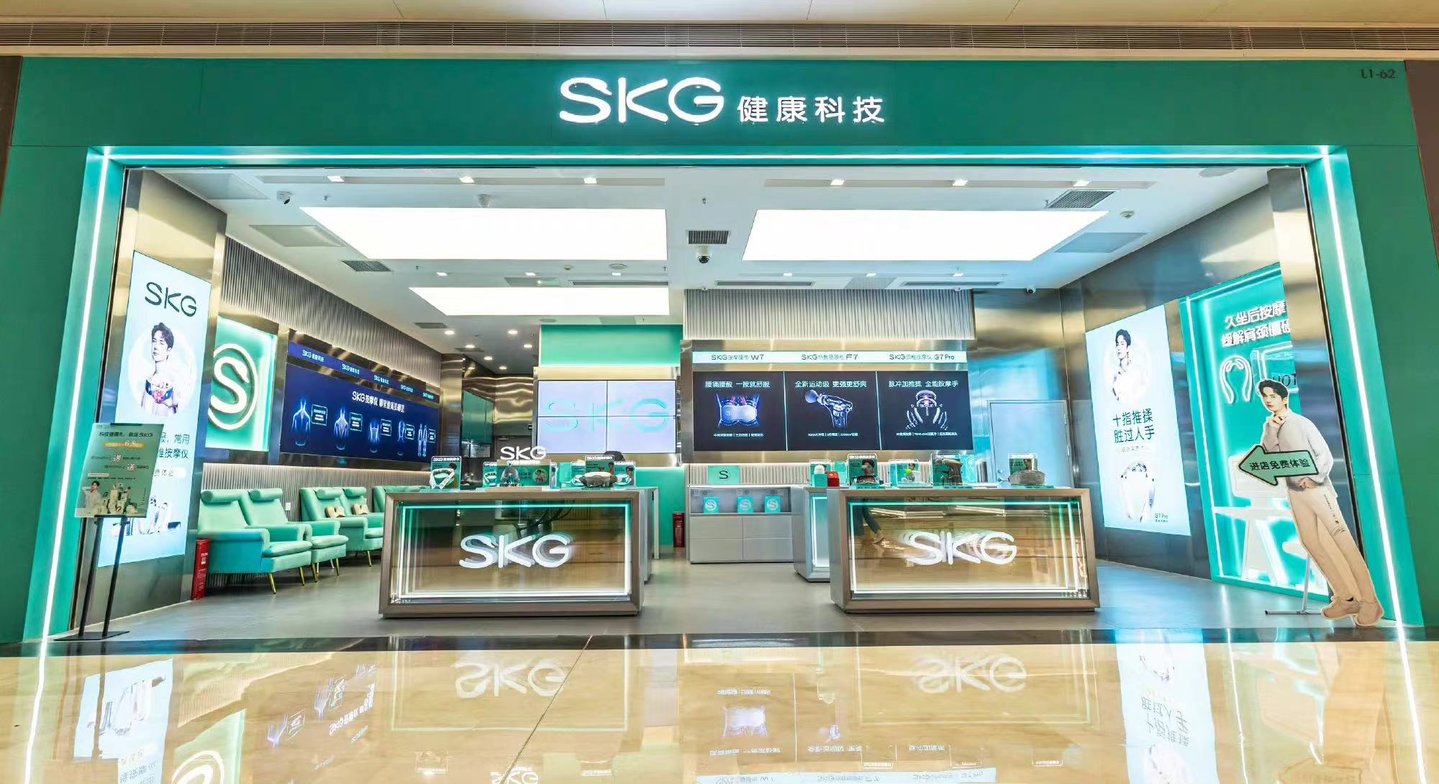
Future Wearable Health Technology Co., Ltd. (SKG) believes that small massagers might be a good solution to ease young people's health worries.
Recently, SKG’s IPO process saw new progress: it updated its financial data, responded to the second round of listing inquiries, and the Shenzhen Stock Exchange resumed its issuance and listing review process.
However, according to “Interface News · Bullet Finance”, some consumers are not convinced by small massagers represented by SKG.
“I wouldn‘t buy a small massager. I think it’s a waste of money and does not solve my actual health needs.”
“I have an SKG eye massager at home. I used it for a few days at first, but then completely forgot about it. Small massagers are not a necessity for me.”
Beyond product reputation concerns, SKG‘s prospectus reveals several issues: three consecutive years of negative net profit growth, operating cash flow turning from positive to negative, excessive reliance on distributors, and a yearly increase in the value of consumer complaints...
Why has the popular massager brand SKG seen its net profit decline for three straight years? More than a year and a half after its first listing application, can SKG, despite these “diseases,” successfully pass the review and go public?
The Past and Present of SKG
SKG founder Liu Jie, born in 1975, graduated from a technical secondary school and previously ran a restaurant and a coal mine in Chongqing. His early career had little overlap with the smart wearable or cervical massager industry.
In 2007, Liu Jie moved to Shunde, Guangdong—known as the “Capital of Home Appliances in China”—and founded the SKG brand. Like most local enterprises, SKG initially focused on various small household appliances.
To avoid fierce domestic competition and ride the wave of appliance exports, SKG targeted overseas markets. Liu built an English B2C website, designed products tailored to foreign users, and invested heavily in search engine advertising.
But it was difficult for a small startup to break into overseas markets. Liu once told the media that within the first half year, his 40 million yuan startup capital was almost exhausted.
With the rise of e-commerce platforms such as JD.com and Vipshop around 2009, combined with intense price competition from brick-and-mortar channels and leading brands, SKG turned its attention to online retail. However, a blue book from the Chinese Academy of Social Sciences indicated that in 2010, online home appliance sales totaled about 80 billion yuan, only 8% of the entire home appliance market. As a niche brand, SKG remained relatively unknown.
It wasn’t until 2016 that SKG began a strategic transformation toward the “personal and family health market,” and two years later launched its first cervical massager, the “4098 series”.
The popularity of the 4098 series showed Liu Jie the potential of the health market. SKG gradually withdrew from small home appliances to focus on smart wearable health products, building its reputation. By 2019, SKG had become the number one brand in the cervical massager category.
To further strengthen its massager business, SKG turned its eyes to the capital market.
Notably, SKG‘s main competitors, OGAWA and Rongtai Health, were already listed on the Shenzhen and Shanghai stock exchanges in September 2011 and January 2017 respectively. Another rival, Breo, passed the listing committee review in December 2020.
On June 28, 2021, Future Wearable Co., Ltd. was restructured into a joint-stock company. Later, in December 2021, Future Wearable Technology Co., Ltd. signed a listing counseling agreement with CSC Financial, officially beginning its IPO journey. On June 27, 2022, the company submitted its prospectus to the ChiNext board of the Shenzhen Stock Exchange. In September of that same year, the listing review was suspended due to expired financial data requiring resubmission.
Behind the Three-Year Net Profit Decline
Although SKG has restarted the listing inquiry, the company has not been doing well in recent years.
According to the prospectus, from 2020 to 2022 (the “reporting period”), the company‘s revenue was 991 million yuan, 1.06 billion yuan, and 905 million yuan, with growth rates of 25.13%, 6.96%, and -14.62% respectively. Net profit was 143 million yuan, 132 million yuan, and 115 million yuan, with growth rates of -32.86%, -7.69%, and -12.88%.
It is clear that in 2022 SKG saw both revenue and profit decline, and net profit has fallen for three consecutive years.
Analysis of the prospectus by “Interface News · Bullet Finance” reveals that the three-year net profit decline is mainly due to changes in selling expenses and increased R&D investment.
In 2020, SKG significantly increased spending on marketing, promotion, and advertising, securing sponsorships for popular variety shows such as “Street Dance of China 3” and “Sisters Who Make Waves”. In October of the same year, SKG made a heavy investment by signing top celebrity Wang Yibo as brand ambassador, with endorsement fees at least in the tens of millions.
In 2021, while maintaining high marketing spending, SKG adjusted its expenditure structure by increasing investment in elevator advertisements offline.
In 2022, SKG further shifted its marketing resources away from TV shows and offline ads, focusing on new media platforms like Douyin and Xiaohongshu.
During the reporting period, SKG‘s selling expenses were 210 million yuan, 215 million yuan, and 165 million yuan, with YoY growth rates of 105.88%, 2.38%, and -23.26%. R&D expenses during the same period were 47.141 million yuan, 74.726 million yuan, and 97.858 million yuan, with YoY growth rates of 107.17%, 58.52%, and 30.96%.
SKG’s R&D expense growth rate outpaced selling expense growth, indicating the company‘s intention to improve marketing efficiency and increase R&D investment, which contributed to the net profit decline.
Liang Zhenpeng, a seasoned industrial economy observer, told “Interface News · Bullet Finance” that the net profit decline is also related to the increasing number of participants in the industry.
Public data shows that more than 3,000 companies are now engaged in the production and sale of small massagers.
From a brand perspective, there are roughly four types of players: first, brands like Breo that focus exclusively on small massage devices; second, manufacturers that started with massage chairs like OGAWA and Rongtai Health; third, cross-border brands such as Xiaomi, NetEase, and JD.com; and fourth, overseas home appliance companies like Panasonic and Philips, along with domestic OEM manufacturers.
According to Liang Zhenpeng, the small massage appliance market has passed its high-growth phase. The influx of new players has intensified competition. As competition heats up, price wars erode product prices and gross margins, ultimately affecting revenue and profit growth for companies like SKG.
Although SKG is trying to enhance product competitiveness through increased R&D, Liang believes that the company still struggles with product quality control. SKG products have repeatedly been flagged for quality issues during inspections by local market supervision authorities. Such failures inevitably harm brand reputation, erode consumer trust, and affect product sales.
“I own two SKG cervical massagers; I use them occasionally, but they only provide temporary relief and fail to address the root cause. I prefer herbal hot compresses, which offer noticeable relief. Small massagers cannot fundamentally cure health anxiety—they only offer brief, localised relief. The key to easing health anxiety is consistent exercise,” a consumer shared with “Interface News · Bullet Finance”.
It is evident that besides quality control issues, there is no unified answer as to whether SKG massagers can truly relieve consumers‘ health anxieties.
SKG’s Persistent Dilemmas
In fact, SKG‘s immediate challenges go beyond declining net profit and include tight cash flow.
According to the prospectus, in 2022 SKG’s net cash flow from operating activities was negative 1 million yuan, a decrease of 100.38% from 265 million yuan in the previous year.
Besides squeezed cash flow, SKG is deeply reliant on distributors.
Unlike Breo, SKG adopts a distribution-oriented sales model. According to SKG, the company concentrates on brand building and product R&D, while leaving channel expansion and operations to distributors with extensive offline retail experience.
During the reporting period, distribution revenue accounted for 97.75%, 98.74%, and 94.99% of SKG‘s main business revenue, respectively.
“This shows SKG does not have strong control over its sales channels,” Liang Zhenpeng said. If distributors become too powerful, the manufacturer loses bargaining power. Without initiative, purchasing prices, selling prices, sales methods, and rebate policies are largely dictated by distributors, ultimately harming the manufacturer’s interests.
Indeed, SKG acknowledges the risk of excessive distributor reliance in its prospectus: if the company cannot maintain stable partnerships with existing distributors, or if distributors fail to operate in compliance with contracts, it could directly or indirectly affect channel sales and brand reputation, adversely impacting operating results.
Furthermore, SKG‘s distribution gross margin has been declining. During the reporting period, distribution gross margins were 58.14%, 52.31%, and 51.74% respectively, showing a consistent downward trend.
Because SKG must leave room for distributor profits, its distribution gross margin is lower than its direct selling gross margin, indirectly confirming the company’s dependence on distributors.
The decline in distribution gross margin directly leads to a drop in overall gross margin. During the reporting period, SKG‘s overall gross margins were 58.16%, 52.31%, and 51.55%, also declining year by year.
Moreover, the amount of money involved in consumer complaints about SKG is increasing. According to the company’s consumer complaint records and inquiries on platforms such as the Shenzhen Consumers‘ Council and the 315 Consumer Service Public Platform, complaint-related amounts were 42,500 yuan, 64,300 yuan, and 165,300 yuan from 2020 to 2022, showing a year-on-year increase.
At the same time, the proportion of product exchanges is rising. SKG’s response to the Shenzhen Stock Exchange‘s inquiry letter shows that exchange rates were 2.23%, 2.79%, and 3.88% from 2020 to 2022, also trending upward.
The increase in complaint-related amounts combined with a higher exchange rate indicates that SKG’s product quality control and customer service are not fully satisfying consumers.
It is also worth noting that SKG‘s carrying value of inventory has been increasing. According to “Interface News · Bullet Finance”, SKG’s inventory consists of raw materials, semi-finished goods, finished goods, shipped goods, and commissioned processing materials, with finished goods and raw materials being the main components.
At the end of the reporting period, SKG‘s inventory carrying value was 33.493 million yuan, 52.055 million yuan, and 85.943 million yuan, representing 5.28%, 5.93%, and 11.95% of current assets respectively, showing a year-by-year increase.
Rising inventory puts pressure on cash flow. If future product or raw material prices move unfavorably, the company may face inventory write-down risks, negatively impacting its operating performance.
Conclusion
SKG once captured consumer pain points and needs with keen insight, leveraging a stylish, lightweight design to become the top cervical massager brand. Through high-profile strategies such as variety show sponsorships and celebrity endorsements, it successfully secured the second position in the domestic small massager market.
But today, strained cash flow, three consecutive years of falling net profit, and heavy reliance on distributors have become major headaches in SKG‘s development.
Liu Jie urgently needs to address these issues; otherwise, even if SKG successfully goes public, the road ahead will remain full of thorns and uncertainty.