Ophthalmologist: Keep Doing These 5 Things and Your Eyes Will Really Be Ruined! Dry Eye Self-Check and Eye Care Guide
Dry, gritty, watery eyes? Read this complete guide to dry eye symptoms, harms, five damaging habits,
Ophthalmologist: Keep Doing These 5 Things and Your Eyes Will Really Be Ruined! Dry Eye Self-Check and Eye Care Guide
Dry, gritty, watery eyes? Read this complete guide to dry eye symptoms, harms, five damaging habits, and solutions.
Article Description
Dry, gritty, watery eyes, or blurry vision after a short time on screens? It could be dry eye disease. Written from an ophthalmologist's perspective, this article explains the definition of dry eye, the three-layer tear film, typical and vision-related symptoms, a simple self-test using white dots on the lower eyelid margin, and the five major harms of dry eye. It highlights five chronic eye-damaging habits: contact lens overuse, prolonged screen staring, popular eye drops, nighttime phone use, and dry air-conditioned environments, and provides actionable solutions such as the 20-20-20-2 rule, a slightly downward screen tilt, 40°C warm compresses, and dietary adjustments.
Article Summary
This is a public-facing science article on dry eye disease. It first uses vivid descriptions such as "eyes stuck together like double-sided tape" and "the drier the eyes, the more they water" to introduce dry eye, then explains the "sandwich" structure of the tear film and the four categories of symptoms when the tear film becomes imbalanced. It then offers a self-test method: look in the mirror for white dots on the lower eyelid margin. It also explains that dry eye can reduce quality of life, increase infection risk, and damage vision. The article focuses on five of the most eye-damaging habits and provides two sets of eye care solutions for the workplace and home, urging readers to seek medical attention if symptoms persist.
Full-Text Mind Map · Understand Dry Eye at a Glance
- Dry Eye Disease Explained
- ① Symptom Recognition
- Dryness / Foreign Body Sensation
- Burning / Stinging
- Blurry Vision / Photophobia
- Reflex Tearing · Morning Sticky Discharge
- ② Self-Test Methods
- Symptom Checklist
- Mirror Check for White Dots on Lower Eyelid Margin (Blocked Meibomian Glands)
- ③ Five Major Harms
- Eye Discomfort · Reduced Quality of Life
- Increased Infection Risk
- Vision Damage
- Worsening Other Eye Diseases
- Chronic Inflammation and Ocular Surface Damage
- ④ Five "Chronic Killers"
- Contact Lenses "007 Work Schedule"
- Prolonged Staring at Electronic Devices
- Popular Eye Drops as "Life Support"
- Nighttime Phone Use
- Using Eyes in an "Air Fryer" Environment
- ⑤ Rescue Plan
- 20-20-20-2 Rule · Slow Blinking
- Slightly Downward Screen Tilt of 10-15 Degrees
- 40°C Warm Compress + Meibomian Gland Care
- Deep-Sea Fish Twice a Week + One Serving of Fruits and Vegetables Daily
- ① Symptom Recognition
🔎 Your Eyes Are Sending Distress Signals
Sometimes your eyes feel like they lack "lubricant," dry and hard to open, as if glued together with double-sided tape.
Your "tear threshold" gets lower, and tears flow for no apparent reason.
After looking at a phone or computer for just a short while, your vision blurs and tears stream down.
When in air-conditioned rooms or riding an e-bike, your eyes sting and cannot open, as if sand got in.
Have you ever felt any of these?
When these symptoms appear, many people dismiss them, thinking their eyes are just a little dry, or that staring at screens for too long has caused visual fatigue. Little do they know, their eyes may very likely have developed dry eye disease.
💧 What Is Dry Eye Disease?
Dry eye syndrome, also known as keratoconjunctivitis sicca, is a common eye condition mainly caused by insufficient tear secretion, excessive evaporation, or abnormal tear composition, leading to an inability of the ocular surface to maintain sufficient lubrication and causing eye discomfort.
Generally, the surface of our eyeballs is covered by a tear film about 6-10 micrometers thick (about 1/10 the diameter of a hair), just like a screen protector protecting a phone screen.
A healthy tear film has a perfect "sandwich" structure:
When the tear film system becomes imbalanced, our eyes will show the following symptoms.
⚠️ Four Categories of Dry Eye Symptoms
Typical Eye Discomfort
Vision-Related Symptoms
Other Accompanying Symptoms
Signals of Severe Complications
Severe eye pain, persistent vision decline, blepharospasm (difficulty opening eyes), corneal opacity or ulceration — if these symptoms appear, it indicates possible corneal damage and requires emergency medical attention.
A Simple Method to Self-Test for Dry Eye
Besides checking against these symptoms, you can also use the following method to preliminarily determine whether you have dry eye disease.
Simple Self-Test: Look in the mirror at the edge of your lower eyelid. If you see a row of small white dots (blocked meibomian glands), like a faucet clogged with scale, it means your oil secretion is already problematic.
🚨 The Harms of Dry Eye Disease Should Not Be Underestimated
Severe cases may cause permanent vision damage.
Many people hear "dry eye" and think it just means dry eyes or excessive tearing. In fact, the harms of dry eye disease far exceed most people's imagination. In the short term, patients may only feel slight discomfort, but over time, it not only affects daily life but may also cause long-term damage to eye health. The main harms include:
Eye Discomfort and Reduced Quality of Life
With dry eye, the eyes activate an "emergency mode," reflexively tearing up in an attempt to relieve the condition, leading to the strange phenomenon of "the drier the eyes, the more they water." Long-term dryness, burning, and foreign body sensations reduce work efficiency, affect reading, driving, and electronic device use, and may even cause anxiety or sleep disorders.
Increased Infection Risk
Insufficient tears weaken the ocular surface's defense capability. Persistent dryness causes corneal epithelial shedding and tiny wounds, making it easier for bacteria and viruses to invade, greatly increasing the risk of recurrent conjunctivitis and keratitis.
Vision Damage
Dry eye disease can cause corneal surface abrasion, leading to keratitis or corneal ulcers, resulting in temporary blurred vision. Long-term untreated cases may leave permanent scars and affect vision.
Worsening Other Eye Diseases
Dry eye disease may aggravate discomfort after glaucoma or cataract surgery, and may even lead to corneal perforation (extremely rare but serious).
Chronic Inflammation and Ocular Surface Damage
Long-term dry eye can trigger chronic inflammation of the ocular surface, creating a vicious cycle that continuously worsens the condition and increases treatment difficulty.
If dry eye symptoms persist, such as red eyes, pain, or vision decline, please take them seriously and seek medical attention promptly to avoid irreversible damage.
💥 The 5 "Chronic Killers" Your Eyes Hate Most
The causes of dry eye disease are complex, including age factors, autoimmune diseases, medication effects, nerve damage, and ocular or systemic diseases. In addition, environmental factors and poor eye-use habits are also major causes. Today, we have compiled 5 of the most eye-damaging environmental factors and poor habits. We hope you will pay attention and avoid them.
Killer ① Contact Lenses on a "007 Work Schedule"
Many office workers wear contact lenses for more than 12 hours, sometimes even sleeping without removing them.
At this point, the lens acts like a sponge, absorbing the already insufficient water on the surface of the eye, causing eye dryness.
More frighteningly, prolonged wear can cause corneal hypoxia, triggering neovascularization — like red spider webs crawling onto the surface of the black part of the eye — which can then lead to corneal diseases and vision decline.
Killer ② Prolonged Staring at Electronic Devices
When we stare intently at screens, our blink rate drops sharply from 17 times per minute to 7 times per minute.
Incomplete blinking is like "half-drawing the curtains," unable to evenly spread oil over the entire surface of the eye.
A survey of people who use electronic screens for long periods showed that those who stare at screens for long periods each day have significantly reduced tear film breakup time.
Killer ③ Using Popular Eye Drops as "Life Support"
The vasoconstrictors in some "daigou" eye drops can make red bloodshot eyes disappear instantly, but they do not really "quench the thirst" of the eyes. Long-term use may also suppress the body's own tear secretion.
It's like using painkillers to treat a stomach ulcer — it easily masks the real problem.
Killer ④ Nighttime Phone Use
Before bed, wanting to relax, many people scroll through their phones or watch tablets in a dark environment.
But these bright screens paired with a pitch-black environment only make the eyes more prone to dryness and fatigue.
Killer ⑤ Using Eyes in an "Air Fryer" Environment
The combination of air conditioning + computer + contact lenses is like roasting your eyes in an air fryer.
The humidity in many offices is usually only 30%-40%, far below the comfortable standard of 50%-60% for the eyes.
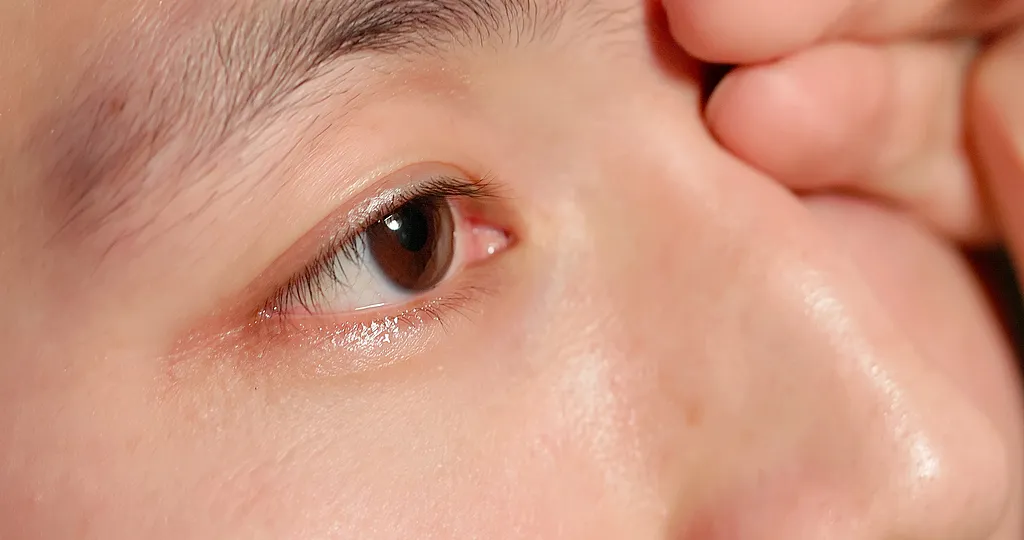
🛠️ To Rescue Dry Eye Disease, Try This "Combination Punch"
I. Eye Care Tips for Office Workers
20-20-20-2 Rule
Every 20 minutes, look at something 20 feet (about 6 meters) away for 20 seconds, while completing 2 "slow blinks" (gently close your eyes for 2 seconds like in slow motion).
Slightly Downward Screen Tilt Principle
Adjust your computer screen so your line of sight is slightly downward by 10-15 degrees. This reduces the exposed area of the palpebral fissure, lowers the tear evaporation rate, and can relieve dry eye symptoms to some extent.
II. Home Care Plan
Warm Compress
Apply a warm towel at about 40°C to the eyes. This can promote blood circulation, improve visual fatigue, and improve the function of the meibomian glands (where the eye's lubricating oil is secreted).
Diet
Pay attention to supplementing unsaturated fatty acids and vitamins, and avoid excessive sweets and greasy foods. The simplest method is to ensure deep-sea fish twice a week plus one serving of fresh fruits and vegetables daily.
Source: Xinhua News Agency WeChat Official Account, compiled from Science China
📝 Full-Text Analysis (Within 500 Words)
From a communication structure perspective, this is a typical three-part health science article: "fear — education — solution." The title uses "Keep doing these 5 things and your eyes will really be ruined" to create urgency, but the body does not stop at fear-mongering: it first uses four everyday scenarios (stuck together with double-sided tape, the drier the eyes the more they water, blurry after looking at screens, stinging in air conditioning) to evoke resonance, then explains the medical concept clearly using the tear film "sandwich" structure, and then provides an actionable self-test — look in the mirror for a row of white dots on the lower eyelid margin. This step is crucial: it turns the abstract "dry eye" into something ordinary people can verify at home today, significantly enhancing the article's practical value.
The article's second highlight is its handling of "harms." Instead of listing literature data, the author breaks the harms into five categories: quality of life, infection risk, vision damage, worsening other eye diseases, and chronic inflammation. Each corresponds to a consequence patients can perceive, giving concrete meaning to "don't take it lightly."
The third section, "5 chronic killers," is the article's memory point. Contact lenses on a 007 schedule, prolonged screen staring, popular eye drops as life support, nighttime phone use, and using eyes in air-conditioned rooms — all five labels are vivid. Among them, details such as "eye drops make eyes drier the more you use them," "blinking drops from 17 to 7 times per minute," and "office humidity is only 30%-40%" directly link common habits to their physiological consequences, making the argument persuasive.
The shortcoming is that the article says little about treatment, mentioning only warm compresses and diet, without covering artificial tear selection or meibomian gland therapy. At the same time, "signals of severe complications" is mentioned only briefly, making it easy for readers to underestimate. Overall, this is a well-completed science article. If medical pathways and medication boundaries were added, it would be more complete.
🎯 Core Problem Solution · Execution Method · Acceptance Model
Core Problem
How to identify and reverse dry eye disease caused by poor eye-use habits, and avoid irreversible damage to the cornea and vision?
Solution (Three Steps)
- Identify: Symptom checklist + look in the mirror for white dots on the lower eyelid margin + hospital tests for tear film breakup time (BUT) and tear secretion test.
- Block: Remove the 5 "chronic killers" one by one — limit contact lens wear time, reduce continuous screen staring, stop using popular eye drops, avoid using phones with lights off, and improve dry air-conditioned environments.
- Repair: 40°C warm compresses + meibomian gland massage + standardized use of artificial tears + diet and environment adjustments.
Execution Method
- Daily: 20-20-20-2 rule; screen tilted downward 10-15 degrees; use phone with lights on at night; consciously practice "slow blinking."
- Weekly: Warm compress 3-5 times, 40°C for 10-15 minutes each time; eat deep-sea fish twice; one serving of fresh fruits and vegetables daily.
- Monthly: Record daily contact lens wear time, keep it within 8-10 hours, and never sleep in them.
- Environment: Keep a humidifier at the workstation to maintain 50%-60% humidity; avoid direct air conditioning airflow on the face.
- Medical: If symptoms persist for 2 weeks without relief, or if red eyes, pain, or vision decline occur, seek ophthalmology care immediately.
Acceptance Model
- Subjective indicators: Self-rated dryness, foreign body sensation, and burning sensation (0-10 scale) decrease by ≥50%.
- Objective indicators: Tear film breakup time (BUT) ≥10 seconds; no white blockage at meibomian gland openings.
- Behavioral indicators: Rest every ≤40 minutes of continuous screen staring; contact lens daily wear ≤8 hours; 100% lights-on rate for nighttime screen use.
- Environmental indicators: Workstation humidity stable at 50%-60%.
- Red line warning: Severe eye pain, persistent vision decline, blepharospasm, corneal opacity → seek medical attention immediately, do not self-medicate.
💬 Comments (10)
🌀 Massager / Beauty Device Knowledge (Random 1 Tip)
Eye massagers mostly use a combination of airbag compression, warm compress, and micro-vibration to physically relax the muscles around the eyes and promote local blood circulation. They are suitable for relieving visual fatigue after prolonged eye use. When choosing one, prioritize three things: first, whether the warm compress temperature can stabilize at around 40°C with overheat protection; second, whether the airbags cover acupoints around the eyes such as Cuanzhu, Yuyao, and Taiyang; third, whether the material is skin-friendly and easy to clean. Note: a massager is only a relaxation tool and cannot replace medical treatment for dry eye disease. It should be avoided during acute conjunctivitis, eye trauma, acute glaucoma attacks, and post-operative recovery periods.
👉 View Eye Massager Product Details❓ 100 Common Questions (20 Shown by Default)
1. What is dry eye disease?
Dry eye syndrome, also known as keratoconjunctivitis sicca, is eye discomfort caused by insufficient tear secretion, excessive evaporation, or abnormal tear composition, leading to an inability of the ocular surface to maintain sufficient lubrication.
2. What are the three layers of the tear film?
The outer oily layer prevents evaporation, the middle aqueous layer maintains moisture and provides nutrients, and the bottom mucin layer helps the tear film adhere to the ocular surface.
3. How thick is the tear film?
About 6-10 micrometers, roughly one-tenth the diameter of a hair.
4. Why is the tear film compared to a phone screen protector?
It covers the surface of the eye, providing lubrication, protection, and maintaining clear vision.
5. What is the function of the meibomian glands?
They secrete oil, forming the outermost oily layer of the tear film to prevent rapid tear evaporation.
6. Are dry eye disease and Sjögren's syndrome the same thing?
No. Sjögren's syndrome is an autoimmune disease that can affect the lacrimal and salivary glands and is one cause of dry eye disease.
7. Is dry eye disease hereditary?
Most dry eye disease is not directly hereditary, but is closely related to constitution, immune status, and eye-use habits.
8. Can dry eye disease be cured?
Most cases can be significantly relieved through treatment and habit adjustments. Some require long-term management and are difficult to cure completely in one go.
9. Which department should I see for dry eye disease?
Ophthalmology. Some hospitals have dry eye clinics or ocular surface disease specialties.
10. Does dry eye mean dry eye disease?
Not necessarily. A comprehensive judgment is needed based on symptoms, tear film breakup time, and tear secretion tests.
11. Why do drier eyes produce more tears?
Eye dryness irritates the corneal nerves, reflexively secreting large amounts of tears, creating the contradictory phenomenon of "dry eyes but watery eyes."
12. Can dry eye disease cause blindness?
Generally not, but long-term untreated cases may cause corneal damage and scarring, leading to permanent vision decline.
13. Can dry eye disease cause headaches?
Dry eye often accompanies visual fatigue, which may induce periorbital pain and referred headaches.
14. What is the difference between dry eye disease and visual fatigue?
Visual fatigue is a symptom experience, while dry eye disease is a tear film dysfunction. They often coexist but are not the same thing.
15. Can long-term contact lens wear cause dry eye disease?
Yes. Lens water absorption and hypoxia can worsen tear film instability, with higher risk from over-wearing.
16. What is the maximum daily wearing time for contact lenses?
It is recommended not to exceed 8-10 hours, try not to exceed 12 hours, and never sleep in them.
17. Can I sleep in contact lenses?
No. When eyes are closed, the cornea is more hypoxic, which can cause keratitis or even ulcers.
18. Can I use eye drops while wearing contact lenses?
Only preservative-free artificial tears can be used. Other eye drops should be used after removing lenses.
19. What is corneal neovascularization?
After prolonged corneal hypoxia, blood vessels grow from the corneal limbus into the clear cornea, which can severely affect vision.
20. Why do popular eye drops make eyes drier the more you use them?
The vasoconstrictors only mask red bloodshot eyes. Long-term use may suppress the body's own tear secretion.
21. What are the harms of vasoconstrictors?
Long-term use can cause rebound hyperemia, making red bloodshot eyes more obvious after stopping, and can also mask the real condition.
22. What eye drops should be used for dry eye disease?
Artificial tears are the first choice. Severe cases require anti-inflammatory medication under a doctor's guidance.
23. How to choose artificial tears?
Prioritize preservative-free single-dose vials, with ingredients such as sodium hyaluronate or carboxymethylcellulose.
24. How many times a day should artificial tears be used?
Generally 3-4 times. Severe cases should follow medical advice and not be used excessively.
25. How to tell preservative-free eye drops?
Check whether the packaging indicates single-dose independent packaging and whether it contains preservatives such as benzalkonium chloride.
26. How long can eye drops be used after opening?
Multi-dose bottles with preservatives are usually used within 4 weeks; single-dose vials are generally used within 24 hours.
27. Can eye drops be used long-term?
Artificial tears can be used for a relatively long time. Those containing hormones or antibiotics must follow medical advice and not be abused.
28. Can warm compresses be used for dry eye disease?
Yes. Warm compresses help soften meibomian gland oil and improve secretion function.
29. What is the temperature and duration for warm compresses?
It is recommended to be around 40°C for 10-15 minutes each time, once a day or every other day.
30. Which is better for dry eye, warm or cold compresses?
Warm compresses are mainly used for meibomian gland dysfunction. Cold compresses are considered only during acute inflammatory redness and swelling.
31. How to massage the meibomian glands?
After a warm compress, gently push along the eyelid margin from inner to outer. Use gentle force and avoid pressing on the eyeball.
32. Can an eye massager be used for dry eye disease?
It can be used to relieve visual fatigue, but cannot replace medical treatment. It is contraindicated during acute inflammation.
33. Is an eye massager useful for dry eye?
It has some auxiliary relaxation effect. For meibomian gland improvement, it needs to be combined with warm compresses and professional therapy.
34. How many times a day is best for warm compresses?
Generally 1-2 times is sufficient. Consistency is more important than frequency.
35. What is the 20-20-20 rule?
Every 20 minutes, look at something 20 feet away for 20 seconds, allowing the ciliary muscle to relax.
36. What does the extra "2" mean?
It means doing 2 slow blinks at the same time, gently closing the eyes for about 2 seconds each time, helping oil spread evenly.
37. Why does looking at screens reduce blinking?
When vision is highly focused, the blink reflex is suppressed. Blinking can drop from 17 times per minute to 7 times.
38. What is the normal blink rate?
About 15-20 times per minute when awake.
39. How high should the screen be placed?
The line of sight should be slightly downward by 10-15 degrees, reducing the exposed palpebral fissure area and tear evaporation.
40. Is the phone eye protection mode useful?
It can reduce blue light and brightness stimulation, but cannot reduce blink frequency, so its effect is limited.
41. What are the harms of using a phone with the lights off?
The large light-dark contrast makes eyes more prone to dryness and fatigue, and may induce intraocular pressure fluctuations.
42. Can blue-light blocking glasses prevent dry eye?
No. Dry eye is mainly related to reduced blinking and tear evaporation, not blue light.
43. Why is it easy to get dry eyes in air-conditioned rooms?
The air is dry and moves quickly, accelerating tear evaporation. Humidity is often below 40%.
44. What indoor humidity is suitable?
The comfortable range for eyes is 50%-60%. Offices are often at 30%-40%.
45. Does a humidifier help dry eye?
Yes. It increases ambient humidity and reduces tear evaporation, but the water tank needs regular cleaning.
46. Why do eyes water when riding an e-bike?
Headwind accelerates tear evaporation. After the ocular surface is irritated, reflex tearing occurs. Wearing goggles is recommended.
47. Is tearing in the wind a sign of dry eye disease?
It may be a manifestation of dry eye, or it may be a tear duct problem. Examination is needed to distinguish.
48. Are eyes more prone to dryness in winter?
Yes. Low temperatures plus heating make the air drier and tear evaporation faster.
49. What should I pay attention to in my diet for dry eye disease?
Supplement unsaturated fatty acids and vitamins, and eat fewer sweets and greasy foods.
50. Is lutein useful for dry eye disease?
Lutein mainly protects the macula and has limited direct effect on dry eye. It can be used as a daily nutritional supplement.
51. Is deep-sea fish good for the eyes?
Yes. Omega-3 fatty acids help improve meibomian gland function and tear film stability.
52. Is vitamin A helpful for dry eye?
Vitamin A deficiency can cause night blindness and ocular surface dryness. Moderate supplementation is beneficial, but excessive intake is harmful.
53. Does staying up late worsen dry eye?
Yes. Staying up late reduces tear secretion quality and aggravates ocular surface inflammation and fatigue.
54. Is there a relationship between insufficient sleep and dry eye?
Yes. Insufficient sleep affects lacrimal gland secretion regulation, making dry eye symptoms more obvious.
55. Does coffee make eyes drier?
Large caffeine intake has a diuretic effect and may slightly worsen dryness. Moderate intake is fine.
56. Does smoking affect dry eye?
Yes. Smoke directly irritates the ocular surface and destabilizes the tear film. Secondhand smoke is equally harmful.
57. Can makeup cause dry eye?
Fragments from eyeliner and mascara can block meibomian gland openings and cause dry eye over time.
58. Does eye makeup need to be thoroughly removed?
Yes. Residual makeup is a common cause of meibomian gland blockage and blepharitis.
59. Can eyeliner tattooing affect the meibomian glands?
It may damage meibomian gland openings and increase the risk of meibomian gland dysfunction.
60. Can people with dry eye disease have refractive surgery?
Pre-operative evaluation is required. Moderate to severe dry eye usually needs to be stabilized before surgery is considered.
61. Is dry eye normal after cataract surgery?
It is relatively common and usually temporary. Artificial tears can relieve it. If it persists, a follow-up visit is needed.
62. Are glaucoma patients more prone to dry eye?
Yes. Long-term use of intraocular pressure-lowering eye drops containing preservatives can aggravate ocular surface damage.
63. Why are older people more prone to dry eye?
Lacrimal and meibomian gland function degenerates with age, and both tear secretion volume and quality decline.
64. Can children get dry eye disease?
Yes. The proportion of dry eye among children who use electronic screens for long periods is rising.
65. Is frequent blinking in children a sign of dry eye?
It may be dry eye, visual fatigue, or tic disorder. An ophthalmology examination is recommended.
66. Are pregnant women more prone to dry eyes?
Yes. Hormonal changes affect tear secretion. Most cases improve after delivery.
67. Why are menopausal women prone to dry eye?
Declining estrogen levels affect lacrimal and meibomian gland function, significantly increasing the incidence of dry eye.
68. Which medications can cause dry eye?
Antihistamines, antidepressants, blood pressure medications, and isotretinoin can all reduce tear secretion.
69. Can thyroid disease cause dry eye?
Yes. Thyroid-associated ophthalmopathy often accompanies dry eyes, photophobia, and proptosis.
70. Can rheumatoid arthritis cause dry eye?
Yes. Autoimmune diseases often combine with Sjögren's syndrome, leading to severe dry eye.
71. What examinations are needed for dry eye disease?
Common ones include tear film breakup time, tear secretion test, meibomian gland imaging, and ocular surface staining.
72. What is tear film breakup time?
It refers to the time until the first breakup point of the tear film appears after blinking. More than 10 seconds is normal.
73. What is the tear secretion test?
A filter paper strip is placed in the lower eyelid, and the length of tear wetting over 5 minutes is measured to evaluate aqueous layer secretion.
74. Are dry eye examinations painful?
Most examinations are non-invasive or only cause slight foreign body sensation. No need to be nervous.
75. What types of dry eye disease are there?
Mainly divided into aqueous-deficient type, evaporative type, and mixed type.
76. How is aqueous-deficient dry eye treated?
Mainly artificial tear supplementation. Punctal plugs may be used to reduce tear loss when necessary.
77. How is evaporative dry eye treated?
The focus is meibomian gland care, including warm compresses, massage, cleaning, and intense pulsed light therapy.
78. What should be done for mixed dry eye?
It requires combined tear supplementation and improvement of meibomian gland function, as well as control of ocular surface inflammation.
79. How long does dry eye treatment take?
Mild cases may improve within weeks. Moderate to severe cases often require months or even long-term management.
80. Can I wear contact lenses during treatment?
It is recommended to pause or significantly reduce wearing and switch to glasses.
81. Can people with dry eye wear colored contact lenses?
Not recommended. Colored lenses have lower oxygen permeability and can significantly worsen dry eye symptoms.
82. Can people with dry eye use steam eye masks?
Yes. Steam warm compresses can help relieve dryness and fatigue. Pay attention to temperature and duration.
83. Which is better, a steam eye mask or a warm towel?
Each has advantages. Steam eye masks are convenient and maintain a constant temperature, while warm towels have higher humidity. Choose as needed.
84. Are eye exercises useful for dry eye?
They have some relaxation and circulation-promoting effects, but cannot replace standardized treatment.
85. Does looking into the distance relieve dry eye?
Yes. It relaxes the ciliary muscle and naturally increases blinking, making it a simple and effective relief method.
86. Does forceful blinking help?
Consciously doing complete slow blinks helps oil spread better than rapid blinking.
87. Can fumigation be used for dry eye disease?
Yes. Hospital herbal fumigation or steam therapy is effective for some patients.
88. Can intense pulsed light treat dry eye?
It is effective for dry eye related to meibomian gland dysfunction and must be performed in a formal medical institution.
89. Does dry eye disease require surgery?
Most cases do not. A small number of severe cases may require punctal plugs or eyelid margin-related surgery.
90. What are punctal plugs?
Tiny plugs used to block the tear drainage outlet, allowing tears to remain on the ocular surface longer.
91. Can dry eye disease resolve on its own?
Mild cases may resolve after removing triggers. Moderate to severe cases usually require intervention.
92. Can I stop medication after symptoms improve?
Adjust gradually under a doctor's guidance. Sudden discontinuation may cause rebound.
93. How often should dry eye patients follow up?
Once every 1-2 months in the early treatment phase, then once every six months after stabilization.
94. What should I do if severe eye pain occurs?
Stop using your eyes immediately and seek medical attention as soon as possible. Do not rub your eyes or use eye drops indiscriminately.
95. What are the signs of corneal ulcer?
Severe eye pain, photophobia and tearing, sudden vision decline, and white opacity on the cornea.
96. What should I do if red bloodshot eyes persist?
Stop using vasoconstrictor eye drops and go to an ophthalmologist to find the cause of the congestion.
97. What does excessive morning eye discharge indicate?
It may be related to meibomian gland dysfunction or blepharitis, or it may be a mild infection.
98. Does long-term dry eye leave scars?
Severe corneal damage can form scars and affect vision, so early treatment is crucial.
99. What are some eye care tips for the office?
Humidifier, slightly downward screen tilt, 20-20-20-2 rule, and conscious slow blinking.
100. How often should I have an eye examination?
Once a year for healthy people. Those who wear lenses long-term or have dry eye symptoms are advised to have one every six months.


